



Every day, we are confronted with problems to solve, obligations, worries, and choices to make continually. Instead of allowing ourselves to be guided by our ordinary, material nature, we would benefit from bringing into ourselves the order and harmony that exist in the highest part of our being—our divine part.
Working on oneself, then, consists of replacing our commonplace thoughts, feelings, and activities with others that are more subtle, purer, and more selfless. These spiritual elements—the quintessence that we add to the events of our lives—will fulfill us and transform us profoundly, and we will become a beneficial force for the whole world.
“The real work is to harmonize all the currents and energies within oneself and outside oneself, so that they converge toward the Source of life, the First Cause.“
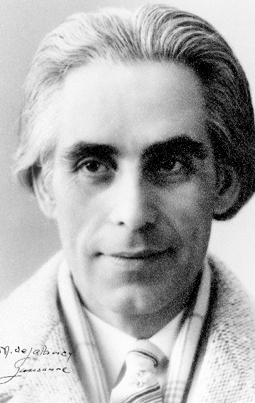
Omraam Mikhaël Aïvanhov, Daily Thoughts 2009, October 30
Fire
More than three millennia ago, Vedic literature mentioned the god of Fire, Agni, as the bearer of the spark of life, a part of which is found in every living being. Fire corresponds to the world of the spirit; it is at the origin of life and of all the phenomena that occur in the universe. It is the one that possesses the secret of eternal life. It is therefore important to seek to know it, to draw it toward us, and to harmonize ourselves with it.
The fire we kindle to light our way or to warm ourselves by its flame is only one aspect of universal fire. We can know it only through its two manifestations: light and heat. But what is fire itself? We do not know; its origin remains a great mystery to us humans.
There are many kinds of fire: the one that sustains life in the human heart; the one that sleeps at the base of the spine; the fire of the sun; and the fire buried in minerals, metals, wood, water, air, and so on.
But on the psychic plane, one can say that there are two kinds of fire:
- The astral fire of sensual desires, cravings, and passions; it consumes beings, causing them to undergo great suffering, for they ultimately become plunged into a veritable hell.
- The fire of spiritual aspirations, on the other hand, seeks those who walk the path of selfless love, renunciation, and sacrifice. At the moment it enters them, it sets them ablaze and transforms them into creatures of light. It becomes the symbol of purification and transformation, the agent of all chemical and alchemical operations.
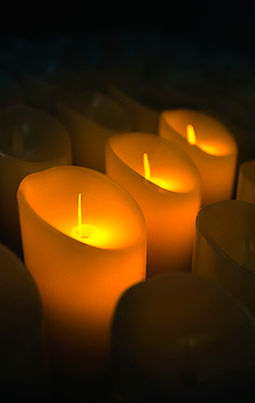
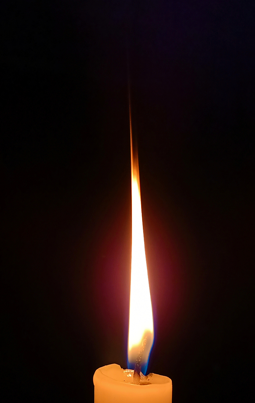
To obtain light, fire teaches us that there is material to burn everywhere. The wax of a candle, which is consumed in order to sustain the flame, is an image of the human being who burns up materials within themselves in order to sustain their inner light. The wood used to make a fire is dead wood—black, twisted branches—another symbolic example of our faults or selfish tendencies, which must be burned in order to fuel the sacred fire within us.
Since time immemorial, the Initiates have told us how to kindle our spirit and soul with this heavenly flame that comes from the sun, in which we shall find the true fire, the source of life. To contemplate it is to seek to receive that living fluid which circulates throughout the universe, so that it may purify, strengthen, and illuminate us.
We have seen that the universal fire, the source of life, belongs to the world of the spirit, of the divine Spirit. At the summit of the celestial hierarchy reign the Seraphim—also called Hayoth ha Kodesch in the Kabbalah, meaning Animals* of Holiness. They govern the four principles of matter: earth, water, air, and fire. But when we humans address the Angels of the four elements, we reach, within our own sphere, only the servants of these four sublime Entities, for the Seraphim alone are the true fire, air, water, and earth.
*“Animals” here means animate beings, “Living Beings.”
How can we address fire? By being aware that we are in the presence of the most sacred and subtle element in creation. By loving it, contemplating it, and merging with it. The initiatic tradition tells us that every activity, however insignificant it may appear—a movement, a feeling, a thought, a word—necessarily produces effects, either good or bad. This is magic, the foremost of the sciences. We see how important our thoughts, feelings, words, and gestures are, so that the forces set in motion by each of these physical or psychic activities produce only beneficial effects—beneficial to us, but also to all the other creatures in the world.
Thus, before beginning any work of importance, Initiates, magicians, and priests customarily light a flame, for wherever fire plays a part, there are always results. On the physical plane, a flame does not possess the powers of solar fire, but on the spiritual plane, it does. That is why, whenever we light a fire, even the flame of a single candle is enough to link our soul and spirit to the sun, to cosmic fire.
Let us take this candle, admire its flame, and ask it to enter us, to line our cells with a layer of fire, so that divine love may one day make its home there.
Are we struggling with difficulties, sorrow, sadness, or temptation? Let us turn to fire, write on a sheet of paper our desire to regain calm, strength, and clarity, and then burn the paper so that the Angel of Fire may grant our prayer.
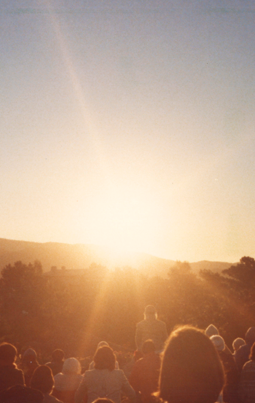
Exercises with the sun are the most powerful, for it is a living fire! As we watch it rise in the morning, let us draw its energies, its vibrations, and its etheric sparks into ourselves, into our heart and soul, through our thoughts. We can capture, in their original purity, the elements necessary for our balance and health; breathe in and absorb, with every cell, this living force, prana, which is the true elixir of immortal life; restore our connection with our Higher Self, which lives in the sun; and strengthen our aura so that it becomes ever more beautiful, expansive, intense, and pure.
As we stand before a fire, there is something in the movement of the flames that urges us to lift ourselves from the earth, to leave the world of multiplicity and return to unity, until we become one with the ocean of divine light. At that moment, we will truly have found ourselves again.
A spiritual teaching
A spiritual teaching is a light: it gives us criteria, methods, and means to overcome our shortcomings and weaknesses, and to face all the circumstances of life without making new mistakes. We often rely on education to achieve this, but it serves only to provide us with a position, authority, prestige, and money. All the intellectual knowledge it gives us will not transform us; we will remain the same, just as we are.
To embrace a spiritual teaching that will improve our lives, there are things within us that need to change, to be transformed. But will we agree to let go of our old habits? Will we accept the truths of this teaching when they do not align with what we think, what suits us, or what we believe? The knowledge we receive from a spiritual teaching is not intended simply to be added to the theories or opinions we already hold. If a bottle is already full, nothing more can be poured into it.
Another common misconception is to believe that, by choosing the path of light, we will be sheltered from life’s mishaps, protected from trials, illnesses, and attacks by ill-intentioned people. If we do not know how to face these difficulties when they arise unexpectedly, then yes, we will be vulnerable. The true work consists in allowing this light to illuminate our understanding and in applying these methods; then, whatever happens, we will remain firm and unshakable.
Clearly, a spiritual teaching can be appreciated only by those who have gained experience, whom life has matured, who ask themselves the essential questions, and who wish to improve themselves. They will learn about the laws that govern the moral world, the question of the afterlife, the survival of the soul, and reincarnation. In the face of these revelations, they will no longer be able to remain the same: a bond with Heaven will have been formed, allowing them to experience spiritual feelings that will enable them to discover other regions within themselves. Even if such a change seems minute, it contains Heaven and Earth, and a seemingly imperceptible thought or feeling can lead to immense achievements if it is intense and given the right conditions.
With a view to self-fulfillment
On the physical plane, our achievements are visible and tangible; they provide evidence of our work, and no one can dispute it. One day, however, despite our accomplishments, we will feel inwardly that something is missing: even the greatest successes will not be enough to fill this void. We need to connect with what is essential—the spiritual.
In the spiritual realm, no one sees our work, not even we ourselves, which may explain why we sometimes become discouraged. Yet only inner achievements have the power to fulfil us. They require the participation of all our energies, of every cell in our body, to develop qualities and virtues and to plant seeds in the realms of light, wisdom, love, and eternity.
It is through action that we experience our greatest joys. And yet, most people stop at understanding: they understand that they should be sincere, honest, forgiving, altruistic… but how do they act afterwards? It matters little to them, as long as they can remain in their comfort zone. Current events clearly reveal where we have ended up, the ecological impasse our planet faces, and the inability of political leaders around the world to find viable solutions for everyone—instead offering illusory solutions because of a lack of awareness. True understanding is never separate from putting that understanding into practice. Anyone who claims to have understood but cannot put that understanding into practice has not truly understood. It is therefore up to us to acquire the elements missing from our knowledge so that we can translate it into action.
Today’s scientific, technical, and technological achievements are not enough to transform life. Until these discoveries are imbued with the spirit, human beings will remain overwhelmed and out of their depth. It is through the spirit that life will truly be transformed: peace and freedom are achievements of the spirit.

Attention
The most common form of attention is the sustained focus we exercise when reading a book, for example, crossing a street, following a conversation, or doing a task properly. Yet it is interesting to note that, in our daily activities, when we seem to be concentrating on what we are doing, we have often actually wandered off into a jumble of thoughts and feelings without realizing it. What, then, if we have a weakness for pleasures and their allure, or indulge too freely in what is pleasant? We would be closing the door to vigilance.
Vigilance, or attention, is one of the greatest qualities we can develop. It enables us to act at any moment on the desires, plans, passions, and cravings that lie in wait for us, without being caught off guard. Attention teaches us to be awake, patient, clear-sighted, and in control of even the most difficult situations, so that we can achieve successes and victories in our lives. It gives us access to the harmony, peace, and light that will protect us from the dangers along our path, without losing what we have gained through so much effort.
We imagine that our innocence, goodwill, and good qualities will bring us divine protection, but nothing can relieve us of the need to remain vigilant—not even our love for God. Making a habit of looking within ourselves to see where we stand is one of the essential aspects of attention: it is the first step toward our liberation, toward true power. No lasting spiritual attainment is possible without it.

Imagination
Most often, human beings use their imagination to satisfy their lower desires: to oust a rival, fulfil selfish ambitions, impose their will, dominate others, and so on. Through the power of imagination, they may eventually succeed, but how will this benefit their spiritual evolution?
The Sages explain that imagination is a kind of screen at the boundary between the visible and invisible worlds, upon which objects, symbols, and entities that ordinarily escape our awareness can be reflected. By practising directing our imagination, and by working to purify our thoughts and feelings, we can perceive and even see images and realities that have not yet appeared on the physical plane, and then bring them into manifestation.
Let us therefore make a conscious effort to “see” only images that bring us joy, courage, and hope. Let us use this wonderful faculty, imagination, first to rebuild and transform ourselves, and then to work upon the whole world, imagining human beings living in abundance and peace. Since the Lord, our Father, created us in His image, let us strive to draw ever closer to that divine image whose imprint we carry within us. This work of imagination, which consists in embracing every perfection, will enable us to rediscover the state of innocence and splendour in which we lived in Paradise in the distant past.
We can practise the following exercise, suggested by the Master Omraam Mikhaël Aïvanhov:
In meditation, we sit with our eyes closed, thinking of our higher Self above us and imagining that it is looking down at us. This means that we ourselves, from up above, are watching ourselves meditating here below. The bond we create, and the currents flowing between these two poles of our being, make possible an encounter—a gradual merging with our true Self. Our higher Self—which possesses all power, all knowledge, and all beauty—is reflected in us, recognises itself through us, and beholds itself through us. It expands the boundaries of our consciousness, and little by little we attain an awakening: that of superconsciousness.
Willpower
Daily life requires a minimum of willpower from us: getting up in the morning, going to work, looking after our family, and so on. There is no great merit in this; everyone does it. If we have not exercised our will and made the effort to go further, we will continue to live as we always have, carelessly and mechanically. We will understand what is good, wish for it and desire it, but unless we put our will into action, we will not bring about the good we approve of. The only way to understand a truth is to put it into practice and live it.
Like athletes, those who have struggled, who continually seek to surpass themselves and who have overcome trials inspire respect and admiration. Why? Because they have developed qualities such as courage, a willingness to make an effort, and endurance. In our inner lives, do we not also have feats to accomplish and victories to win: remaining patient in the face of difficulties, overcoming sadness, discouragement and disappointment, and mastering our thoughts and feelings? We could apply our will to carrying out this uplifting work.
Putting our will at the service of a high ideal is the best inner direction we can take to develop our qualities and correct our shortcomings. However, this spiritual journey is not without obstacles: we will encounter temptations and opposing wills that seek to entice us and draw us away from our commitment. Doing the will of God does not mean obeying and serving an external authority; it means listening to our soul and spirit, allowing our higher nature to inspire us to fulfil this ideal of divine perfection. Our whole being will then be committed, set apart, occupied and protected.

Patience
The Initiates tell us that patience is the quality that enables us to endure—for example, to endure hardships, suffering, or an obstacle that delays or prevents us from achieving a goal. In our time, we are immersed in action and business; we are in a hurry to succeed, and everything must happen very quickly. As a result, patience is practised less and less and is even regarded as a hindrance. This way of life can only have harmful consequences for our inner balance and our health: nervousness, restlessness, irritability, and so on.
How can we escape this whirlwind? By understanding and accepting that patience works with time. Instead of reacting immediately to words or events, we can become inwardly silent, allowing our finest qualities, harmony, and light to emerge and help us find the best way to respond. With time, the events we have experienced and the difficult moments we have had to face can become a source of enrichment and joy, bringing us strength and allowing us to savour peace.
We would gain much by meditating on the Creator’s forbearance, which is the most fitting word to describe His infinite patience. It is the expression of His sublime love. For millions upon millions of years, He who created the worlds and galaxies has been waiting for human beings to become reasonable, and nothing can disturb His peace. He endures everything, even when He sees His children committing crimes and laying waste to the world He created. This patience is the most incomprehensible and mysterious of all.

Working with energies
Primordial Man, the perfect Man, as conceived by Cosmic Intelligence, is like the sun. We all possess this solar force, which can manifest through our hands, our eyes, our brain, and so on. The question is: how can we manifest this energy harmoniously?
If we take as our model the work of cultivating the earth, which involves digging channels to direct water, we too can carve out pathways within ourselves to receive and circulate divine energies. These channels are carved through actions, and through the thoughts and feelings that prepare the way for those actions. If nothing has been prepared, the Creator’s wisdom, love, and will, which circulate throughout space, will not flow into us; they will nourish other consciousnesses instead.
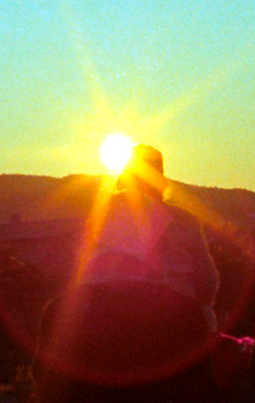
The rays of the rising sun are the subtlest energies with which we can nourish our heart, soul, and spirit. The vibrations, the particles of light, and the divine life we receive will awaken our spiritual centres, especially our solar plexus, so that we may commune with the Divine.
Then, if everything within us has been prepared, we will be able to pour forth upon the whole world the purest and most beneficial blessings.
Unity

The Tree and the Human Being
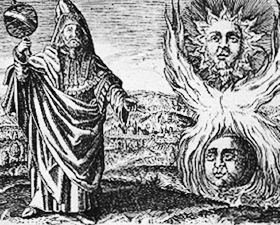
The Two Natures of the Human Being
The human being is a perfect unity, polarized into two opposite yet complementary aspects: the lower nature and the higher nature.
The lower nature, the ego, manifests itself through instincts and selfish, limited appetites. It always wants to make everything revolve around itself, to take everything for itself; it wants to be served. The slightest loss, the slightest frustration, or the smallest obstacle causes it pain.
These instinctive tendencies, firmly rooted in human beings, are the legacy of an archaic nature that holds the resources essential to survival on earth. But this is not the final stage of human evolution: intelligence and reason must then come into play.
The higher nature, the divine Self within us, is like the sun: its fundamental quality is to give. Those who practise helping, enlightening, supporting, and radiating light to those around them draw closer to the ideal human being and to perfection. But before reaching that point, they must first acquire discernment, observing and analysing their impulses, desires, and thoughts.
To better understand the process of transformation taking place within us, let us listen to the alchemists: they say that lead does not turn into gold; rather, it disappears and gives way to gold. In the same way, the lower nature will never become divine. It cannot improve; it can only disappear and make way for the manifestations of the higher nature, for each retains its own essential character.
Through our efforts, exercises, and meditations, we have the power to draw the divine down into ourselves so that it may work and manifest itself more and more in our lives. When we have died to our lower nature, another being will live within us, capable of sublime creations, of masterpieces that only our higher nature can create.

The diamond
Dans les entrailles de la terre, le processus de transformation de la matière minérale est extrêmement long : des millions d’années sont nécessaires pour que se forment l’or et les pierres précieuses telles que le diamant, lorsqu’enfin la pression et surtout la température deviennent moins élevées et permettent la cristallisation des éléments gazeux.
Les alchimistes cherchent à accélérer ce processus.
Ils disent que l’homme est lui-même la matière à “cuire”, la matière sur laquelle se font les opérations, et le feu utilisé pour la chauffer c’est notre amour. Pour accélérer la transformation et produire de l’or en nous, nous devons donc augmenter la chaleur sans tout brûler. Pour cela il nous faudra apprendre à régler ce feu, ce qui nécessite une grande maîtrise, car l’amour peut être le feu le plus destructeur qui soit, si on ne sait pas le tempérer par la sagesse.
Ainsi, celui qui entretient le feu d’un amour de plus en plus spirituel parvient à extraire la quintessence de sa propre matière, et c’est cette quintessence qu’il introduit dans tout ce qu’il fait. Chaque fois que l’on met en œuvre la lumière et la chaleur, on forme en soi la pierre philosophale, on devient un véritable alchimiste.
Il n’y a pas de pierre philosophale ailleurs qu’en nous-même, il n’y a pas de pierre philosophale plus puissante que l’esprit. L’esprit pourra alors dans notre for intérieur transformer les métaux en argent ou en or, les pierres ordinaires en pierres précieuses, guérir les maladies, prolonger la vie, dévoiler les secrets de la nature. Telle est la dimension sublime de la pierre philosophale.

L’alchimie spirituelle
L’alchimie étudie l’art de la transformation de la matière, et si quelques personnages du passé ont pu fabriquer de l’or, ce mot évoque encore aujourd’hui une science et des techniques chargées de mystères et de secrets.
Mais l’alchimie spirituelle est bien autre chose, elle s’occupe aussi et surtout de la matière psychique. Elle ne coupe pas l’homme en deux : un esprit -le ciel- qui serait seul digne d’intérêt, et un corps -la terre, la matière- qu’il faudrait ignorer, mépriser. Si le corps et l’esprit ont été créés l’un et l’autre, c’est qu’ils ont quelque chose à faire ensemble. L’œuvre alchimique est d’arriver à se transformer intérieurement pour tout changer en or, c’est-à-dire en lumière.
La pierre philosophale, qui est le but du travail alchimique, est l’union des deux principes masculin et féminin, le soufre et le mercure, qui s’unissent pour produire un enfant : le sel. La préparation de la pierre philosophale est longue et ardue, elle obéit aux mêmes lois que la conception et la gestation d’un enfant, ces mêmes lois qui régissent les différents règnes de la création.
On retrouve donc le même processus cosmique : le travail de l’esprit sur la matière. L’esprit fertilise la matière en introduisant en elle sa quintessence, et l’enfant né de ce travail c’est l’être humain, mais aussi l’univers tout entier avec la multitude des créatures qui le peuplent.
Les richesses intérieures
L’être humain est un laboratoire immense où sont rassemblés tous les éléments, solides, liquides, gazeux et même ignés ; car c’est le feu qui organise la vie et donne cohésion à tous ces éléments dont l’être a besoin pour son développement physique, psychique et spirituel. Naturellement, on est obligé de chercher ces éléments à l’extérieur pour croître et survivre dans la nature, mais n’oublions pas que tout est en nous, et c’est cette conscience de nos richesses, de nos pouvoirs, qu’il s’agit d’acquérir et développer.
Ces richesses sont enfouies et cachées profondément en nous, on ne les voit pas. Nous pouvons faire des efforts pour les découvrir, descendre en nous-même, et trouver alors ces quintessences qui s’appellent amour, sagesse, douceur, bonté, paix, inspiration, pureté, gratitude.

Les évidences ordinaires et la raison
Dans le cours de la vie quotidienne, nous sommes face à des situations qui nous semblent évidentes : la faiblesse, les peurs, la maladie, les échecs, les difficultés diverses. Mais pourquoi nous incliner devant ce que le monde physique nous présente comme une nécessité inéluctable ? Pourquoi capituler devant une raison matérielle limitative ?
Si on apprend comment agir, si on met en avant la force de l’esprit qui peut triompher de tout, c’est une autre raison, tout aussi évidente, qui se mettra en place et aura la victoire : la raison divine. Ceux qui acceptent de se laisser guider par elle, exercent leur pensée, luttent, avancent et deviennent maîtres de toutes les situations.
Spirit and matter
From stone to divinity, we witness the evolution of matter, for one of the reasons for the human presence on Earth is not merely to study matter, but to spiritualize it so as to work with the forces that animate it. All those who strive to perfect themselves refine their own matter—both physical and psychic—through the power of the spirit.
Spirit and matter are inseparable; they work together, each in its rightful place. Although we cannot escape the demands of the physical plane, we have our spirit, light, meditation, and prayer at our disposal to gain mastery over matter, bring it under control, and, above all, imbue it with new vibrations.