

The Wessak Festival
Wessak is a very important festival in most countries of the Far East. It is celebrated under various names in India, Sri Lanka, Nepal, China, Thailand, Cambodia, Malaysia, Myanmar, Laos, Indonesia, and Singapore. In Tibet, it is celebrated in the Vesak Valley, from which it takes its name.
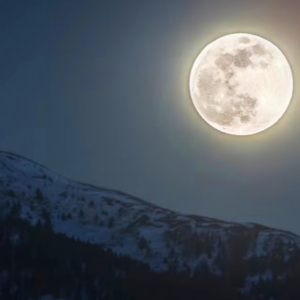
This great festival commemorates the birth, enlightenment, and earthly passing of the Buddha. It takes place each year during the full moon in the sign of Scorpio according to Western astrology, when the sun is in the sign of Taurus.
For the occasion, many pilgrims traditionally travel on foot to Mount Kailash, located in the Himalayan range of Tibet. This mountain, which Hindus call Kailash (“Shining like crystal”) and Tibetans call Tisé (“Mountain of Sources”) or Kang Rinpoche (“Precious Jewel of the Snowy Peaks”), is considered by devotees to be the symbolic center of the universe.
Wessak represents the descent and blessing of the energy of Buddhism: each year, the Buddha, as an expression of divine wisdom, comes to bless the Earth and all humanity during this full moon.
Spiritual masters throughout the world prepare for this great festival several days in advance and extend it for several days afterwards, over a period of about fourteen days. They invite everyone to participate in it with all their heart and soul.
Thoughts of Master Omraam Mikhaël Aïvanhov
At the time when the sun passes through the constellation of Taurus, the Initiates, following a mysterious command, go to a ceremony that takes place in a specific location in the Himalayas. From all continents, they make their way toward this place, drawn there magnetically at the time of the full moon in May…
At that moment, all the Initiates, through their soul and spirit, travel to the Himalayas to attend a great ceremony held in the presence of all the great Masters of humanity.
Just as eels gather in the Sargasso Sea to lay their eggs, the Initiates gather there to give birth to the purest and most elevated feelings and thoughts, which they will then spread throughout the entire world.
Perhaps tonight, some among you may be able to go there with the Initiates and witness them carrying out their magnificent work.
Œuvres Complètes, tome 2, extraits de la conférence du 14 mai 1938
The place where the Wessak ceremony takes place is the most powerful of all. Some Initiates go there physically; others go there through their astral body, by projecting themselves. But it is possible for everyone to participate through thought—you as well.
During that night, you must not keep any metallic object on you, because metal is not a good conductor of the waves descending from the spiritual realms. However, the only truly indispensable condition for being admitted to this gathering is harmony. Make sure to keep no negative thoughts or feelings toward others, and find the inner attitude that will allow you to receive the blessings that the Initiates send on that night to the children of God.
Daily Thoughts 2015, p. 373
Initiation aims to pull the human being out of the limited circle of the lower self and project them into the limitless circle of cosmic consciousness. This consciousness already lives within them, but they do not yet grasp it clearly. The awareness they have of themselves is limited to their lower self. But their lower self is not yet truly who they are. Their true « Self » is their higher Self, their sublime self, which lives within them, works, and expresses itself, but of which they have not yet become fully conscious.
The higher Self seeks to know itself through the lower self, even within the dense matter of the physical body. It already knows itself above, of course, but it also wants to know itself below. Through the effort you make to envision this approach to your higher Self, a day will come when such an illumination will occur that your consciousness will no longer have limits. You will be in the light, and you will finally feel one with your divine Self.
Complete Works, volume 22 (2006 edition), September 30
* And what happens when there are two full moons in May?
Some years, there happen to be two full moons in May. In such cases, an official date for celebrating the festival is chosen and set by Buddhist communities, and that decision rightfully belongs to them.
However, one can consider the perspective developed by Omraam Mikhaël Aïvanhov when he first spoke about this festival, in a lecture he gave in Paris on the full moon Saturday of May 14, 1938: “The Mystery of the Two Fish and the Five Loaves.”
His exceptional skills in astrology led him that evening to connect seemingly unrelated elements: the influences of the Sun in Taurus and the Moon in Scorpio; the spirit of the Buddhist Wessak; the Gospel episode of Jesus multiplying the loaves; and, more surprisingly, the annual migration of eels to the Sargasso Sea to reproduce.
His mystical intuition vividly linked these four domains through the idea of multiplication, abundance, fertility, fecundity, dissemination, giving, generosity… For the Buddhist Wessak is above all a great sacred ceremony during which great Initiates gather in a secret place in the Himalayas, either physically or through bilocation, and from there project and spread with love thousands of luminous thoughts toward humanity, for its spiritual evolution and salvation.
According to Master Omraam Mikhaël Aïvanhov, it is this Sun-in-Taurus / Moon-in-Scorpio configuration that influences the fertile spirit of Wessak, rather than the following full moon (Sun in Gemini / Moon in Sagittarius), which brings different influences. This is why, in some years, the “true astrological May full moon” is the first of the two May full moons. Or even—surprisingly for those accustomed to the Gregorian calendar—in some years the so-called “May” full moon actually falls in April!
In reality, the date of this Buddhist festival does not depend on the Gregorian calendar but on the Hindu calendar: it corresponds to the first full moon of the lunar month called “Vaiśākha” in Sanskrit—hence the name Wessak.